AI Layer
Is the OpenLink AI Layer (OPAL)'s core functionality consumable via APIs to enable alternative front-ends and developer ecosystem ramp up?
Yes, here's the YAML document that describes the API using OpenAPI terms using pattern: https://cname/chat/api/openapi.yaml/json. For the URIBurner instance it is [https://linkeddata.openlinksw.com:8443/chat/api/openapi.yaml/json](https://netid*qa.openlinksw.com:8443/chat/api)
AI Layer
How would the OpenLink AI Layer (OPAL) be integrated into a Web Site?
The application consist of an HTML based Single Page App (comprising HTML, Javascript, and CSS). The client's core engine comprises Javascript using Websockets and fetch() which can easily be re*used in other Single Page Apps. Skinning can be achieved via CSS, retaining the same client core for conversational interaction handling.
AI Layer
Is there an example of an alternative UI skin for the OpenLink AI Layer (OPAL)?
Yes, see https://id.myopenlink.net/DAV/home/smalinin/Public/ch/index_main.html
AI Layer
Post successful login, is the OpenLink AI Layer (OPAL)'s preferred storage URL being looked up (de*referenced) for user*controlled storage of session transcripts?
Yes, since the AI Layer (OPAL) is a Single Page Application that leverages Solid for loose coupling of backend data storage i.e., you session data can end up in your preferred Personal Data Space or Pod.
AI Layer
How do quickly obtain a historic list of OpenLink AI Layer (OPAL) users?
Use the [following SPARQL Query](https://netid*qa.openlinksw.com:8443/sparql/?default*graph*uri=&query=select+%3Fs+from+%3Curn%3Achat%3Ausers%3E+%7B+%3Fs+foaf%3Anick+%3Fn+%7D&should*sponge=&format=text%2Fhtml&timeout=10000):
SELECT ?s FROM <urn:chat:users> { ?s foaf:nick ?n }
AI Layer
How do I change OpenLink AI Layer (OPAL) access mode from broadly open to restricted by OpenAI API Key?
Run the following Virtuoso Registry command:
registry_remove('openai*chat*app*key')
AI Layer
How do I remove all or specific OpenLink AI Layer (OPAL) session logs?
Use the following SQL commands:
DELETE FROM OAI.DBA.CHAT_SESSION WHERE CS_CHAT_ID = '{session*id}' ;
DELETE FROM OAI.DBA.CHAT_SESSION_INFO WHERE CSI_CHAT_ID = '{session*id}' ;
AI Layer
How do I deal with the following OpenLink AI Layer (OPAL) error.
[rate_limit_exceeded] Rate limit reached for 10KTPM*200RPM in {openapi*id*for*your*org} on tokens per min. Limit: 10000 / min. Please try again in 6ms. Contact us through our help center at help.openai.com if you continue to have issues.
Attempt starting a new session, wait for a new usage window to open up, or change the foundation model from GPT*4 to one of the GPT*3.5*turbo variants.
AI Layer
How to I initialize an OpenLink AI Layer (OPAL) session scoped to a specific fine-tuning configuration?
Send a prompt/request with null prompt and session id set to 'system+{name of the file without json suffix}' then new session will be created using content of the json document as the initial prompt
AI Layer
What does the following OpenLink AI Layer (OPAL) error mean?
[rate_limit_exceeded] Rate limit reached for 10KTPM*200RPM in organization org*6ormwBGOH0Q7YMMsE3aaaaa on tokens per min. Limit: 10000 / min. Please try again in 6ms. Contact us through our help center at help.openai.com if you continue to have issues.
This error means that you have reached the maximum number of requests or tokens that you can send to the OpenAI API in one minute, according to your current plan and organization¹². The error message shows the following information:
* _rate_limit_exceeded_ is the error code that indicates that you have exceeded the rate limit.
* _10KTPM*200RPM_ is the name of your plan, which stands for 10,000 tokens per minute and 200 requests per minute.
* _org*6ormwBGOH0Q7YMMsE3aaaaa_ is the ID of your organization, which is a group of users who share the same API key and rate limit.
* _tokens per min_ is the metric that you have exceeded, which is the number of tokens that you have sent to the API in one minute. A token is a unit of text that represents a word or a punctuation mark.
* _Limit: 10000 / min_ is the limit that you have exceeded, which is the maximum number of tokens that you can send to the API in one minute under your current plan.
* _Please try again in 6ms_ is the suggested action that you can take to resolve the error, which is to wait for 6 milliseconds before sending another request to the API.
To avoid getting this error in the future, you can try the following tips:
* Pace your requests and avoid making unnecessary or redundant calls.
* If you are using a loop or a script, make sure to implement a backoff mechanism or a retry logic that respects the rate limit and the response headers². You can read more about our rate limiting policy and best practices here.
* If you are sharing your organization with other users, note that limits are applied per organization and not per user. It is worth checking the usage of the rest of your team as this will contribute to this limit.
* If you are using a free or low*tier plan, consider upgrading to a pay*as*you*go plan that offers a higher rate limit.
AI Layer
What is Virtuoso?
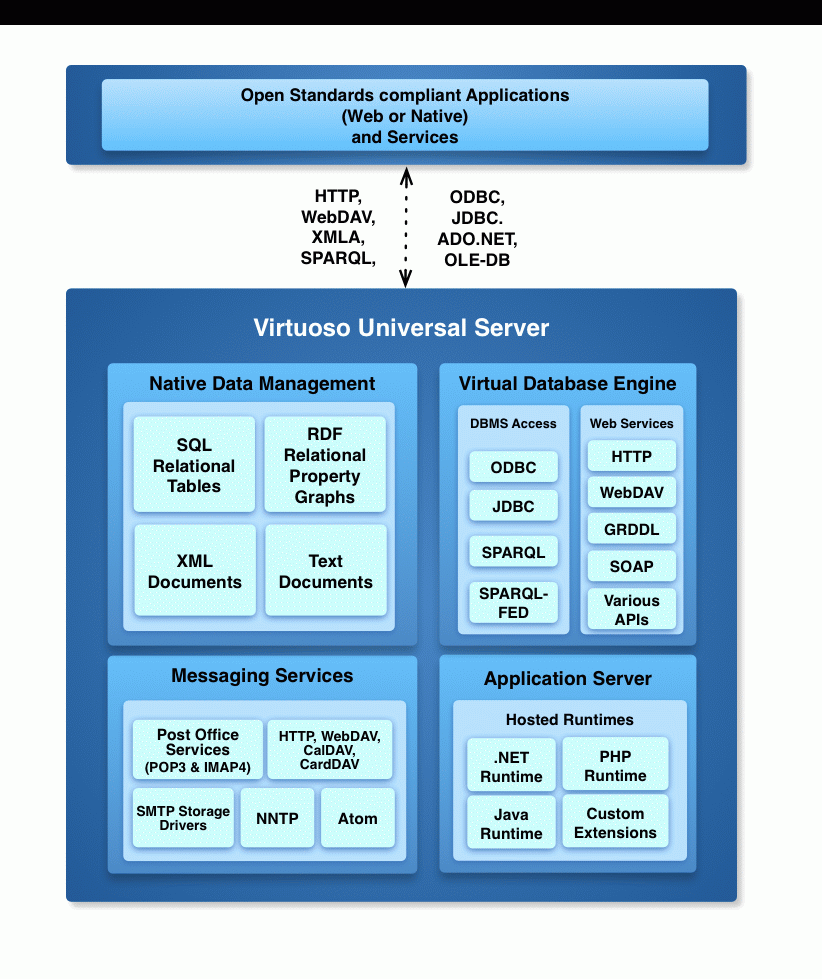
Virtuoso is a combined multi-model DBMS and HTTP-based Application Server platform that supports critical open standards for providing applications with loosely-coupled access to disparate data sources. It is cross-platform, high-performance, scalable, and secure. It also includes native reasoning and inference for identity reconciliation and data wrangling across disparate data sources.
AI Layer
What is a Large Language Model (LLM)?
A Large Language Model (LLM) is an advanced multi-lingual natural language processing technology, with an uncanny understanding of sentence syntax and semantics. It can produce responses, in conversational mode, based on user inputs.
AI Layer
How does Virtuoso integrate with Large Language Models (LLMs)?
Virtuoso uses LLMs as a natural language based conversational UI/UX into its modern multi-model data layer comprising structured data represented as tables (n-tuples) or RDF-based entity relationship graphs (3-tuples) which are also generally referred to as Knowledge Graphs. Integration occurs in loosely-coupled fashion, courtesy of Linked Data Principles where hyperlinks functioning as powerful pointers usable for creating data source names from SQL and/or SPARQL query templates for LLM fine-tuning.
This capability extends to the following functionality realms:
<ul>
<li>
- Reasoning & Inference: Built-in and/or custom reasoning and inference that scales massively for conceptual data analysis, integration, and management</li>
<li> - Data Virtualization: Powerful virtual database core that extends its data reach to HTTP-, ODBC-, and JDBC-accessible data source across private and/or public networks. Once attached, this data is harmonized semantically using a variety of mapping techniques based on existing open standards e.g., the RDF-based RDF to Relational Mapping Language commonly referred to as R2RML.</li>
<li> - Data Crawling: Unique native ability to crawl data from across a public or private network as part of its query solution production pipeline in very fine-grained form i.e., to the level of query language variables and constants.</li>
</ul>
AI Layer
What are the benefits of using Virtuoso and Large Language Models (LLMs) together?
Some of the benefits of using Virtuoso and Large Language Models (LLMs) together are:
- You can access and integrate data from any source, including web pages, databases, APIs, files, etc.
- You can query and explore data using natural language in a manner that's transparently mapped to declarative languages such as SQL and/or SPARQL
- You can generate natural language responses that are informative, relevant, and engaging
- You can create content such as summaries, reports, articles, etc. based on data
- You can crawl a web of documents and/or a semantic web of data en route to discovering new data sources and entity relationship types
- You can learn from LLM suggestions and insights to improve your productivity and knowledge, at levels unrivaled to date.
CxOs
What is OpenLink Virtuoso?
OpenLink Virtuoso is a high-performance, scalable, and multi-model database platform that provides support for various data management tasks, including storing, querying, and analyzing structured and unstructured data.
CxOs
What are the key features of OpenLink Virtuoso?
OpenLink Virtuoso offers a range of features, including support for SQL, RDF, SPARQL, XML, JSON, and Web Services. It provides built-in support for virtualization, data integration, and advanced analytics, making it a comprehensive solution for data management.
CxOs
How does OpenLink Virtuoso handle data integration?
OpenLink Virtuoso facilitates data integration by providing a virtualization layer that allows you to access and query data from multiple sources as if it were in a single unified database. It supports various data formats and protocols, enabling seamless integration of diverse data sources.
CxOs
Can OpenLink Virtuoso handle large-scale data processing?
Yes, OpenLink Virtuoso is designed to handle large-scale data processing. It utilizes parallel processing and optimized query execution techniques to efficiently process queries on large datasets, ensuring high performance and scalability.
CxOs
How does OpenLink Virtuoso support data security?
OpenLink Virtuoso offers robust data security features, including access control mechanisms, encryption for data at rest and in transit, and support for industry-standard authentication and authorization protocols. It allows you to define fine-grained access policies to protect sensitive data.
CxOs
Does OpenLink Virtuoso support semantic technologies?
Yes, OpenLink Virtuoso has extensive support for semantic technologies. It includes a native RDF store and supports SPARQL queries for querying and manipulating semantic data. It enables the creation and exploration of knowledge graphs and the integration of semantic metadata.
CxOs
Can OpenLink Virtuoso be used for data analytics?
Absolutely, OpenLink Virtuoso provides advanced analytics capabilities. It supports SQL-based analytics functions and allows you to perform complex analytical queries on your data. It also integrates with popular analytics tools and frameworks for in-depth data analysis.
CxOs
Does OpenLink Virtuoso support data virtualization?
Yes, data virtualization is a core capability of OpenLink Virtuoso. It enables you to create virtual views of data from disparate sources without physically moving or replicating the data. This allows for real-time access to integrated data and simplifies data management.
CxOs
How can OpenLink Virtuoso enhance data interoperability?
OpenLink Virtuoso promotes data interoperability by supporting various data formats, protocols, and standards. It enables seamless integration and exchange of data between different systems and applications, facilitating collaboration and data sharing across the organization.
CxOs
What resources are available for learning and support with OpenLink Virtuoso?
OpenLink provides comprehensive documentation, tutorials, and guides for OpenLink Virtuoso. Additionally, there is an active user community and professional support services available to assist with any questions or issues that may arise during implementation and usage.
CxOs
Why is Virtuoso important?
Virtuoso is a versatile multi-model and multi-purpose platform that enhances data access, integration, and management. It effectively breaks down data silos by integrating disparate data sources and offers native, robust, high-performance, and scalable management for operating on data organized as SQL-accessible relational tables and SPARQL-accessible knowledge graphs. Additionally, it supports advanced data governance and monetization functionality through fine-grained attribute-based access controls.
CxOs
What are typical Virtuoso Use Cases?
Virtuoso excels at harmonizing data silos through a semantic layer, creating a versatile platform for various applications. Key use cases include: AI-driven Customer Support, Enterprise Knowledge Management, Modern Data Governance, Data Productization, and Data Management and Integration.
CxOs
What is a Virtuoso Knowledge Graph?
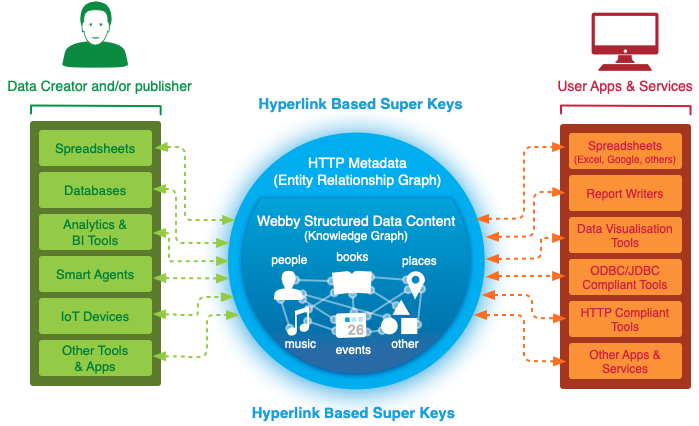
A Virtuoso Knowledge Graph is a semantic entity-relationship graph constructed with hyperlinks that function as Data Source Names (DSNs). These links enable lookup access to both native data stored in SQL-accessible relational tables or SPARQL-accessible entity relationship graphs, and to external data sources through established access standards such as HTTP, ODBC, or JDBC.
CxOs
How does Virtuoso impact AI usage?
Virtuoso enhances AI applications by providing high-performance, scalable, and secure Knowledge Graphs. These graphs act as a potent fine-tuning complement, using loosely coupled predefined query templates for data, information, and knowledge lookups. This structure significantly boosts the accuracy of AI outputs, minimizingâor potentially eliminatingâthe effects of hallucinations.
CxOs
What are the key benefits of Virtuoso?
Virtuoso offers a secure and high-performance multi-model platform (supporting both relational tables and graphs) for data access, integration, and management. It leverages existing open standards such as SQL, SPARQL, GraphQL, HTTP, and RDF.
CxOs
What are the key use cases for Virtuoso?
Virtuoso is instrumental in AI-enhanced modernization of customer support, knowledge management, data productization and monetization, data governance and security, and de-siloing data to drive digital transformation.
CxOs
What makes Virtuoso unique?
Virtuoso stands out due to its high performance, scalability, and sophisticated data security features.
CxOs
How does Virtuoso aid digital transformation?
Virtuoso aids digital transformation by providing an advanced platform that virtualizes heterogeneous line-of-business data silos. It constructs knowledge graphs using Linked Data principles, wherein hyperlinks act as powerful super-keys, overcoming common data challenges like high velocity, volume, variety, veracity, and sensitivity to changes.
General
What is the Virtuoso strategy to scale? Is it possible to start small and then add servers if needed?
Yes. You start with Single-Server which scales up to more than 100 billion RDF triples and then migrate to the Elastic Cluster Edition if your scalability demands exceed what's offered by single-server instances.
General
How do I use Virtuoso to deploy Linked Data to the Web?
By leveraing its built-in support for HTTP and deployment of RDF using Linked Data Principles. This boils down to loading RDF and/or attaching native or external 3rd party
DBMS hosted tables and then exposing to interaction endpoints for SPARQL, Faceted Search & Browsing, or Hyperlinks that provide fine-grained entity names
General
How do I use R2RML to map RDB to RDF with Virtuoso?
You can use the HTML-based R2RML Wizard or upload existing R2RML documents for processing using Virtuoso's native R2RML processor
General
How do I Generate and Deploy RDF-based Linked Data from Tables in a Relational Database?
Virtuoso's HTML-based Admin Interface ('The Conductor') provides a one-click interface for generating RDF-Views that are deployed using Linked Data principles from relational database tables.
General
How do I attach ODBC- or JDBC-accessible Tables to Virtuoso?
Any ODBC- or JDBC-accessible table can be attached to Virtuoso using SQL Attach Statements or the visual HTML-based Conductor Admin Interface
General
How do I create a change-sensitive structured-data document from a SPARQL Query?
Using the SPARQL Query Service interface, perform the following steps: 1. Using the Virtuoso WebDAV Filesystem, a new folder and set the DET Folder type to Dynamic Resources, and set access privilege permissions accordingly; 2. Go to your Virtuoso SPARQL endpoint, select 'Save resultset to WebDAV folder' option and select your newly created DET folder.
Licensing
What types of licenses does OpenLink Virtuoso offer?
OpenLink Virtuoso offers two primary types of licenses
: Open-Source and Commercial. The open-source version is covered under the GNU General Public License (GPL), whereas the commercial license comes with more advanced features and professional support.
Licensing
Can I use the open-source version of OpenLink Virtuoso for commercial purposes?
Yes, you can use the open-source version of OpenLink Virtuoso for commercial purposes. However, it's important to understand that it is subject to the terms and conditions of the GNU General Public License (GPL), which requires you to release any modifications you make to the source code.
Licensing
What are the advantages of the commercial license over the open-source license?
The commercial license of OpenLink Virtuoso offers several advantages over the open-source version, including access to more advanced features like advanced security, custom reasoning & inference, high-availablity replication, and professional support. It also lifts some restrictions imposed by the GPL license, allowing for OEM-related customization if required.
Licensing
How is the price of the commercial license determined?
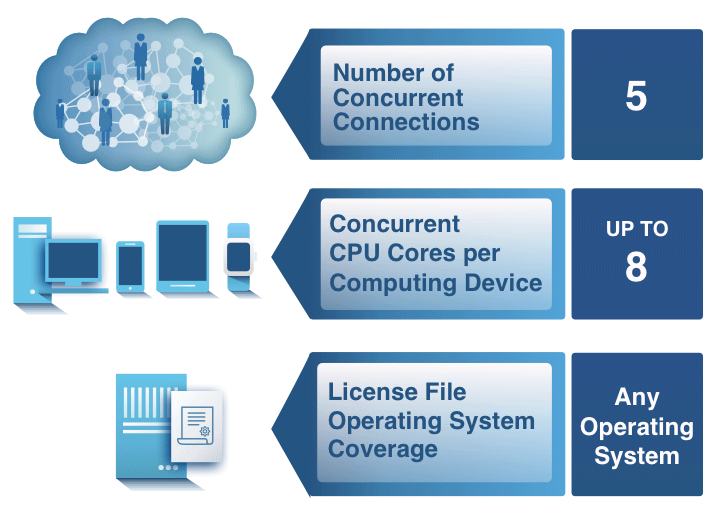
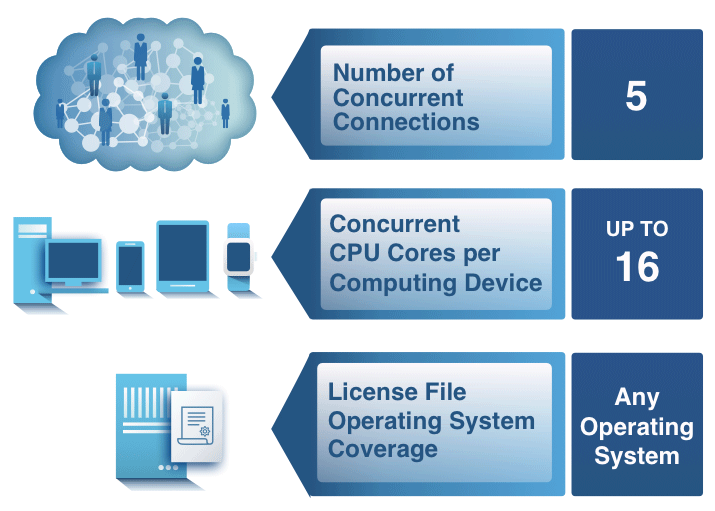
The pricing for the commercial license of OpenLink Virtuoso is based on several factors including the required features, the number of servers, and the nature of support services. Please reach out to OpenLink directly for a custom quote.
Licensing
Is there a trial version of the commercial license available?
Yes, OpenLink usually offers trial versions of their commercial licenses for potential customers. The trial version is typically available for a limited time and allows you to evaluate the product before purchase.
Licensing
If I start with the open-source version, can I later upgrade to the commercial license?
Yes, you can upgrade from the open-source version to the commercial version at any time. You will need to reach out to OpenLink directly to facilitate the switch and ensure a smooth transition.
Licensing
What kind of support does the commercial license offer?
The commercial license offers professional support which can include bug fixes, feature enhancements, performance tuning, and general consulting on best practices. The specifics of support can vary depending on your agreement with OpenLink.
Licensing
Can I modify the source code of the commercial version of OpenLink Virtuoso?
Modification of the source code of the commercial version of OpenLink Virtuoso is typically restricted. You'll need to review the terms of your license agreement or consult with OpenLink directly for specific guidelines.
Licensing
What happens when my commercial license expires?
If your commercial license expires, you will no longer have access to the advanced features, performance improvements, and support services that come with the commercial version. You may have the option to renew or downgrade to the open-source version.
Licensing
Are there any discounts available for educational or non-profit organizations?
OpenLink may offer discounts for educational institutions and non-profit organizations, but it's best to contact them directly for specifics related to these cases.